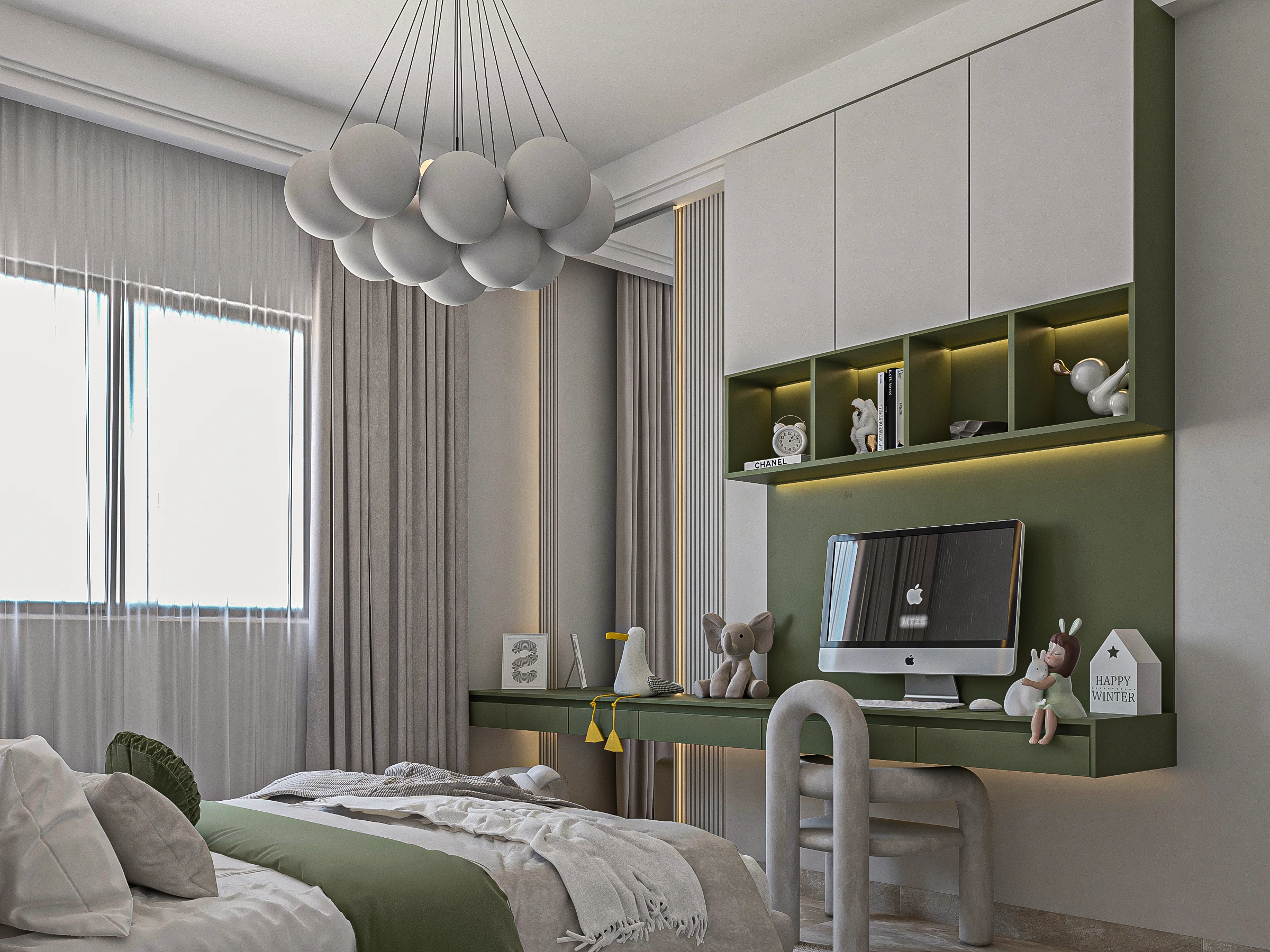
DESIGNING A BEDROOM FOR YOUR CHILD
Designing a bedroom for a child is a significant undertaking that requires a harmonious blend of aesthetics, functionality, and safety in every detail. More than just a place to rest, this space serves as a personal world where a child can freely play, learn, explore, and nurture their imagination every single day. Therefore, the choice of design style, primary color palette, and furniture layout should be carefully considered to create a room that aligns with the child’s individual preferences, age, and daily needs.
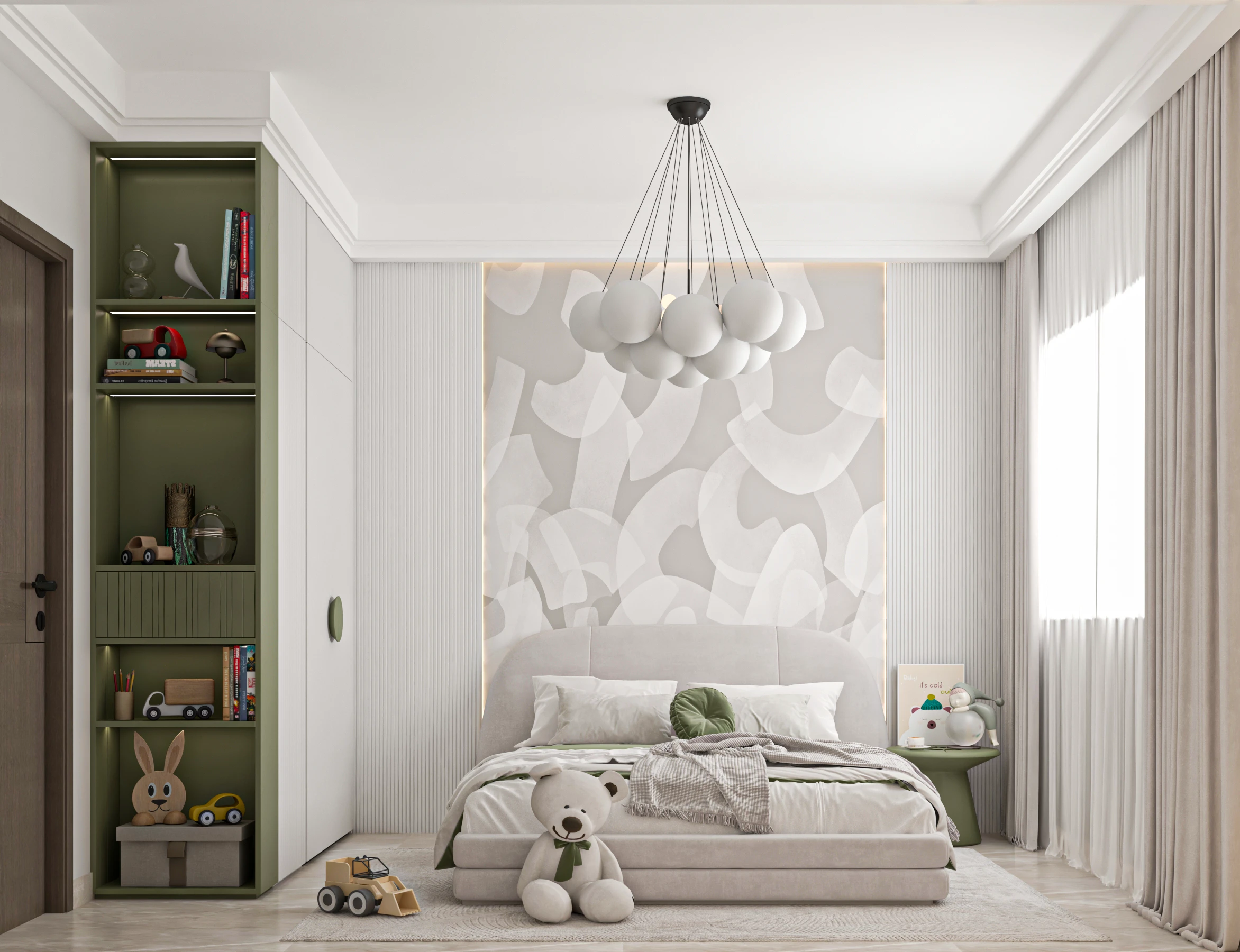
- In terms of design, soft, bright colors—such as white, beige, pastel pink, mint green, or light blue—are often preferred to create a pleasant, welcoming atmosphere filled with positive energy. A skillful blend of these tones makes the room feel lively while maintaining a sense of harmony and refinement. Furthermore, playful decorative patterns, nature-inspired imagery, cartoon characters, or charming design details add unique focal points, sparking a child’s interest and making them want to spend more time in their own space.
- The furniture is arranged scientifically to maximize available space and ensure ease of use. Beds are designed with appropriate dimensions, prioritizing simple, sturdy, and safe structures. Wardrobes, bookshelves, and storage drawers are organized to keep the room tidy; sharp corners are avoided, and the layout allows children to easily access or put away their personal belongings. In particular, the use of multifunctional furniture—such as beds with built-in drawers, wall-recessed cabinets, or clever decorative shelving—helps optimize space while adding convenience to the room.
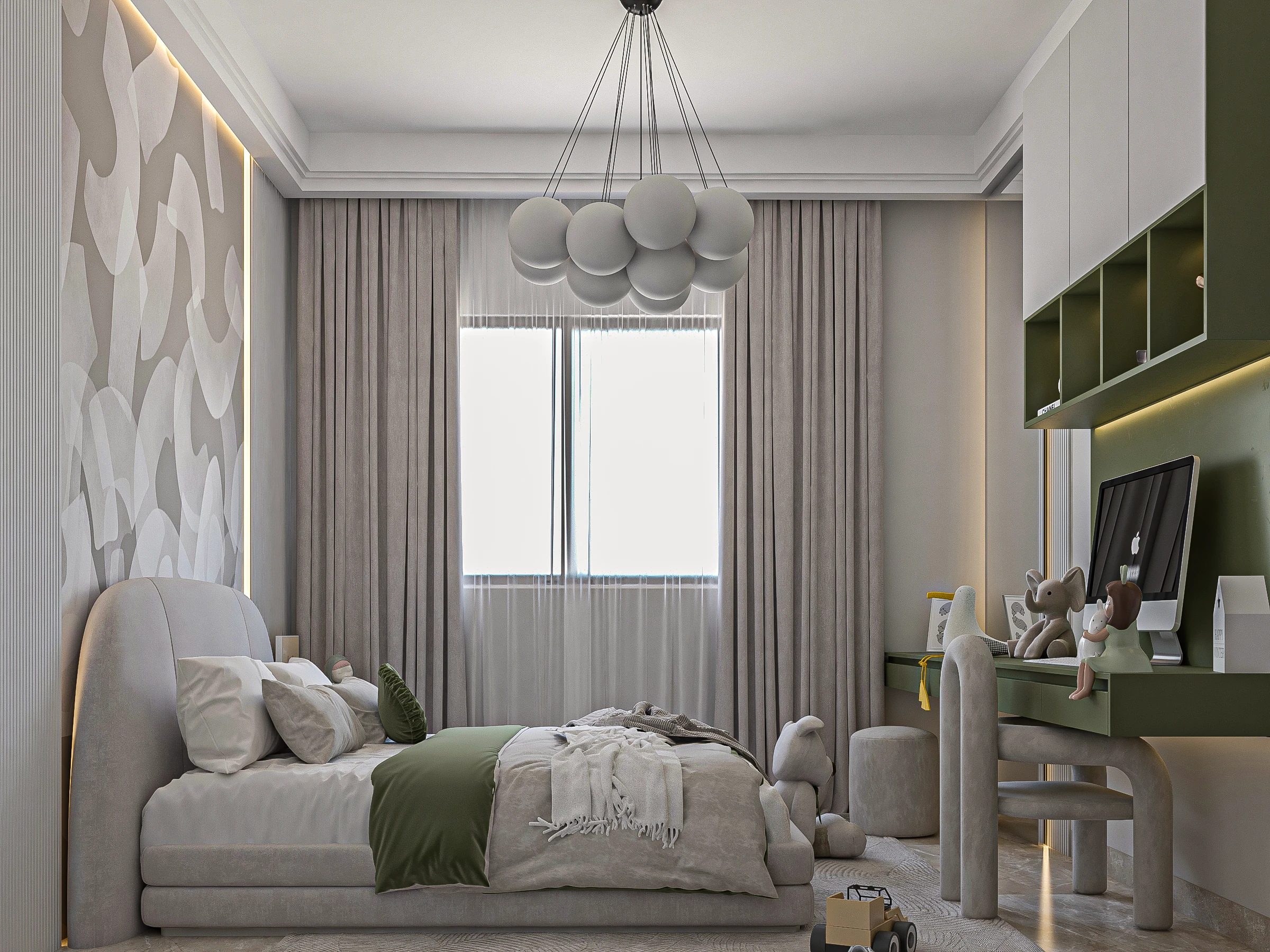
- The study area is also a key focus, featuring a suitably sized desk, a comfortable chair, and adequate lighting. The desk should be positioned to take advantage of natural light, complemented by a dedicated task lamp to facilitate reading, writing, and creative activities. Small bookshelves, a notice board, or a display corner for toys not only add vibrancy to the room but also encourage the child to develop study habits, learn to organize their belongings, and foster independence from an early age.
- Natural light and ventilation are equally important design considerations. Thoughtfully placed windows, paired with adjustable curtains, ensure the room remains airy, pleasant, and full of vitality. The lighting system should be chosen with an appropriate intensity—creating a warm, cozy atmosphere in the evening while providing sufficient brightness for daily activities. Furthermore, interior materials should be selected with a priority on durability, ease of cleaning, and safety; features that could pose a risk of injury or negatively impact the child’s health should be avoided.